
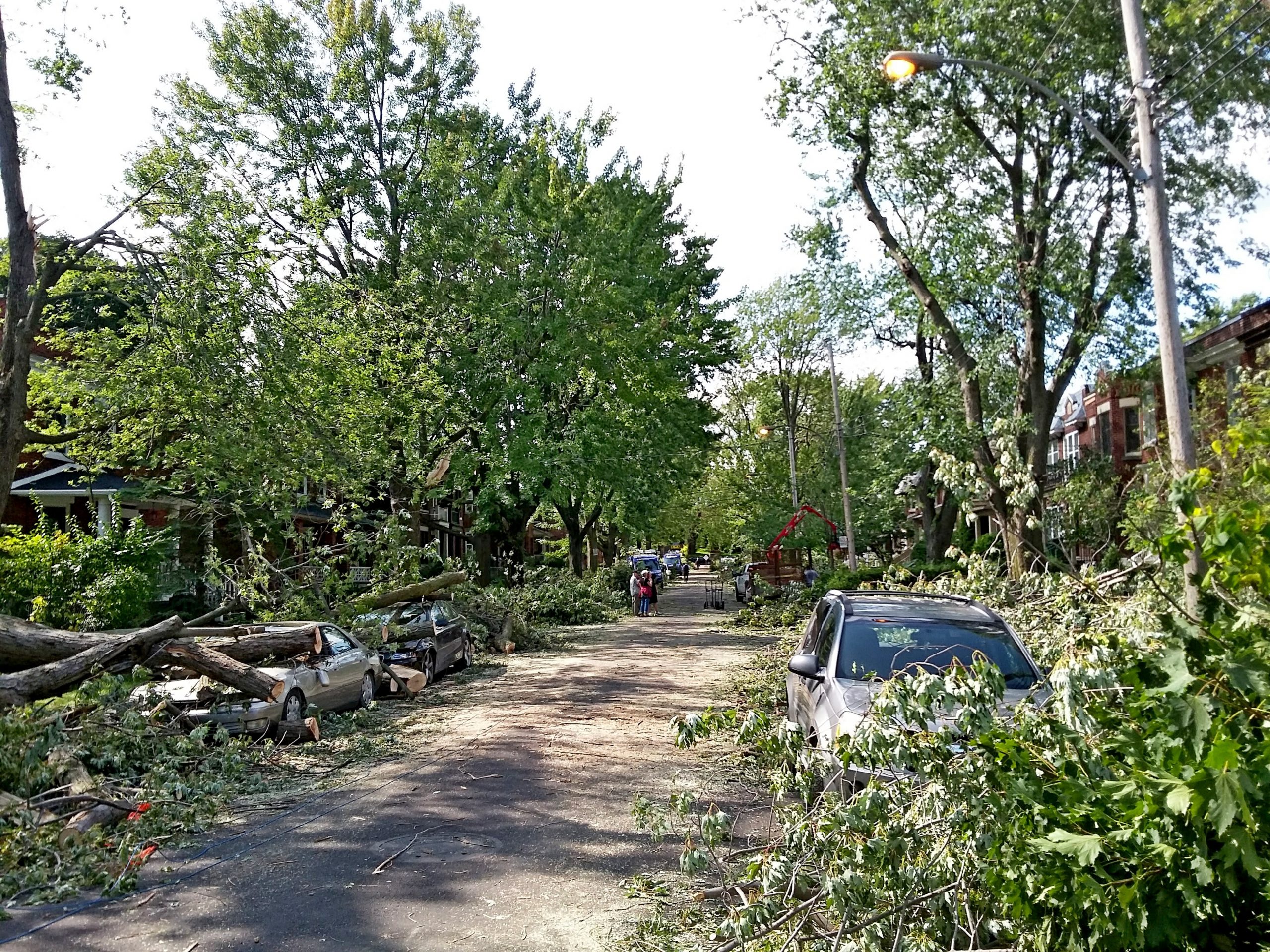


For some, the mere sight of a tree taller than a house is a public safety concern, while for others, trees are architectural marvels without a single flaw. In reality, the truth lies somewhere between these two extremes. These days, virtually all tree species have flaws, such as vulnerability to certain pests, to extreme weather conditions, or to chronic structural defects. In reality, all mature trees are susceptible to developing structural defects, hence the need to inspect them regularly to assess the risk. Tree-related risk is determined based on several factors: the environment (site use, infrastructure, wind exposure, nearby construction, etc.), occupancy, structural defects, and the risk of failure and damage. The main observable structural defects generally involve wood degradation due to decay or insects and are often the same across species (linked to species profile): decayed forks, decayed wounds or lesions, branch dieback, etc.
Generally, an experienced assessor can evaluate the risk of failure based on directly observable signs of decay in the crown, the trunk or the root flare. Sometimes, a sound test using a mallet is necessary to assess the extent of internal decay. More rarely, in-depth assessments are required to determine the extent of decay (for example: tomography, density measurement, aerial inspection). In all cases, when pruning or bracing/cabling (using a cable or rod in the crown or in fork to reinforce a failure point) is recommended, it is because a risk needs to be mitigated or a problem needs to be corrected. As a last resort, if the entire tree poses a significant risk that cannot be mitigated by pruning or bracing/cabling, felling becomes the only possible option.
The case of the Black Locust
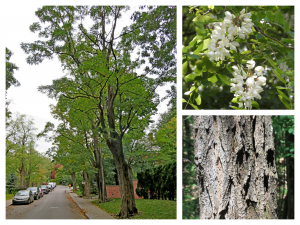
The complexity of assessing tree-related risks becomes quite apparent when considering certain more problematic tree species. This is the case with the black locust (Robinia pseudoacacia), an invasive exotic species native to the United States. Planted for a long time, it has naturalized almost everywhere in the Northern Hemisphere, primarily due to its strong ability to produce suckers and stump sprouts. It is now considered a pest species, here as elsewhere, but it remains prized for its ornamental qualities—its form, foliage, bark, and flowers. The black locust can reach a height of just over 20 m in our latitudes and has a lifespan of about 90 years.